Thursday, September 8, 2022

ALASKA - PART 3

COMING INTO THE COUNTRY

Beside Alaska's beauty, I was struck again by the vastness of its wilderness.  In Washington Cascade and Olympic mountains you only need to hike a short distance in designated Wilderness or Forest Service lands before you come across wires or roads that lead you back to civilization. You hardly left.   In Alaska, you only need to travel a short distance out of populated areas to plunge you into vast untracked wilderness of a completely different scale - larger than most states.  Six of the ten largest US National Parks, and the top four, are in Alaska.  This doesn't count other untracked areas.  

Alaska is HUGE!  Two and a half times the size of Texas, and superimposed on the continental US it stretches from the S.F. Bay area to northern Minnesota and down to Florida.  

Over half of all visitors to Alaska arrive on cruise ships up the Inside Passage. Many travel north as far as Denali N.P. outside Anchorage, or south to Kenai Peninsula, both in South Central Alaska.  (See map below). Only one-half of one percent of 2019 visitors traveled north of the Arctic Circle to the Brooks Range and Gates of the Arctic N.P. or beyond - our next destination.


My book for this trip was "Two in the Far North" by Margaret (Mardy) Murie.  She was raised in Fairbanks in the first decades of the twentieth century, married the biologist Olaus Murie, and in the twenties through forties traveled the Interior and Far North by dog-sled in the winter assisting with his research.  Mardy became a conservationist and author who helped preserve millions of acres of land in Alaska.  She testified before Congress for the creation of the Arctic National Wildlife Refuge and passage of the Wilderness Act.  Our itinerary will stop at several places they traversed.  A wonder to see through her eyes a century ago in the dead of winter.  Well worth the read.

After leaving our friends in Juneau, we flew to Fairbanks on the solstice.  This is still south of the Arctic Circle but the sky never darkened.  Here In the Country, we discovered Alaskans are an odd group.  Outside the native population, they seem here for the love wilderness, to exploit resources, to be self-reliant, or are a bubble off - or several of the above.  Checking into our Fairbanks hotel our host couldn't make eye contact and hardly spoke - and this is in "hospitality" work.  We took an Uber to a nearby pizza place as downtown has no there there.  The driver had a mountain-man beard (as do most men here), a nervous twitch, wild eye, and spoke obtusely.   

Typical Fairbanks truck at dinner.  Enlightened and woke.

The next morning we boarded our tour bus to travel the Dalton Highway to the Arctic Circle. Our bus driver was a chatty pleasant fellow, but awkward.  He was tall and heavy-set, but explained that before he moved here he was eighty pounds heavier. From him we learned about dry-cabins, damp-cabins, and wet-cabins, among other homesteading essentials.  Dry means they have no water, all water is carried in for bathing and cooking, and necessities are in an outhouse.  Wet-cabins are fully plumbed, and damp is in-between, maybe domestic water but still an outhouse.   We heard that most everyone outside the cities live in a dry-cabin.  We also were informed about the pipeline and stopped to examine one section for a stretch-the legs-break.

Little Tour Bus and driver

Alaska Pipeline with "radiators" on the posts to dissipate heat from permafrost.

We changed transportation at the Arctic Circle to continue on to Coldfoot.  Most of the twelve or so passengers were only going to cross latitude 67 - over sixteen hour RT ride for their Instagram moment.


Alaska Taiga with stunted Black Spruce and the Pipeline snaking in the distance

Our Instagram moment (If we had Instagram)

The Dalton Highway, also called the Haul Road, is 400 miles long through otherwise inaccessible wilderness from Fairbanks to Deadhorse on the Arctic Ocean. It is the only road in the Far North, and except for some local roads on the coast there is nothing west of Anchorage to the Bering Sea.  Three quarters of the state is roadless.  This is why the remarkable Bush Pilots are such a fearless necessity.  

The Haul Road was built in 1974 through taiga and tundra, and over the 4800' Atigun Pass, in only five months!  The sole purpose was to transport building supplies and workers to construct the pipeline adjacent to it, and to the North Slope oil fields.  The whole pipeline runs 800 miles from Prudhoe Bay on the Arctic Ocean to Valdez on Prince William Sound (remember Exxon Valdez).  Oil started flowing in 1977.  Remarkable what humans can accomplish when short-term profit is involved, sadly less so when the threat is not immediate but existential.  The haul road is still mostly gravel and used almost exclusively by long-haul truckers year-round, and at high speeds.  It only opened up to the public 1994 after Alyeska, the oil consortium that built it, donated it to the state.  Our "little tour bus" would announce itself that way on the CB at every bend or rise in the road to inform the on-coming hurtling behemoths.  

Long haul truck hauling ass. 

Ten hours after leaving Fairbanks we arrived in the early evening in Coldfoot - but still in bright sunlight.  Coldfoot was a small settlement on the Koyukuk River river that Mardy and Olaus passed through after weeks traveling and camping on the frozen Yukon and tributaries.  It was named not because of frostbitten feet, but rather after living a winter here, many settlers got "cold feet", IE fearful, and left.  Coldfoot now is only a wide spot in the road for truckers to take a break and get a meal.  The only accommodation is former pipeline-worker housing - basically trailers cobbled together that still smell of diesel.  It's also the home for the Interagency Visitor Center for the Gates of the Arctic N.P. and other federal lands north of Denali.  I love Federal Visitor Centers;  they are informative, have great topical books/maps and the people are very friendly - this was no exception.  

Coldfoot - essentially a truck stop

Our Dorm Room

Robin uncertain about a meal with no wine - only Bud.  
The Alaska shaped sign on the bar says "Furthest North Saloon in the US"

After arriving, settling into our dorm room, and dining on the buffet with truckers we boarded a six-seater just before 10:00 at night for an hour plus air-tour of Gates of the Arctic N.P.  There are no trails or roads as mentioned, so by air is the only way to see it without weeks of hiking cross-country in bug-infested bear country.  Despite the late hour it was gorgeously lit by the circling sun and confused rain clouds.  

Flight under heavy clouds over Gates of the Arctic N.P. 
Note the lack of trees.

Higher peaks and river valleys that twist and turn in Gates of the Arctic N.P.

Vastness of Gates of the Arctic N.P.

Our next day we scheduled a drive to Atigun Pass, about two hours north on the Dalton Highway.  This pass over the Brooks range separates the taiga (with stunted Black Spruce trees) from the North Slope tundra (all growth within six inches above or below the surface).  Our driver was a nice young man from rural Colorado.  He and his wife are year-round residents for their second season.  They homestead, love exploring the outdoors, guide and have an on-line business making jewelry for additional income.  Like all up here, they live in a dry cabin.  Having only lived in Alaska for two years they were delightfully normal and conversant.  When you think about it, Coldfoot is twelve hours from any rescue or assistance if needed.  Living in the wilderness, like this young couple, requires self-reliance.

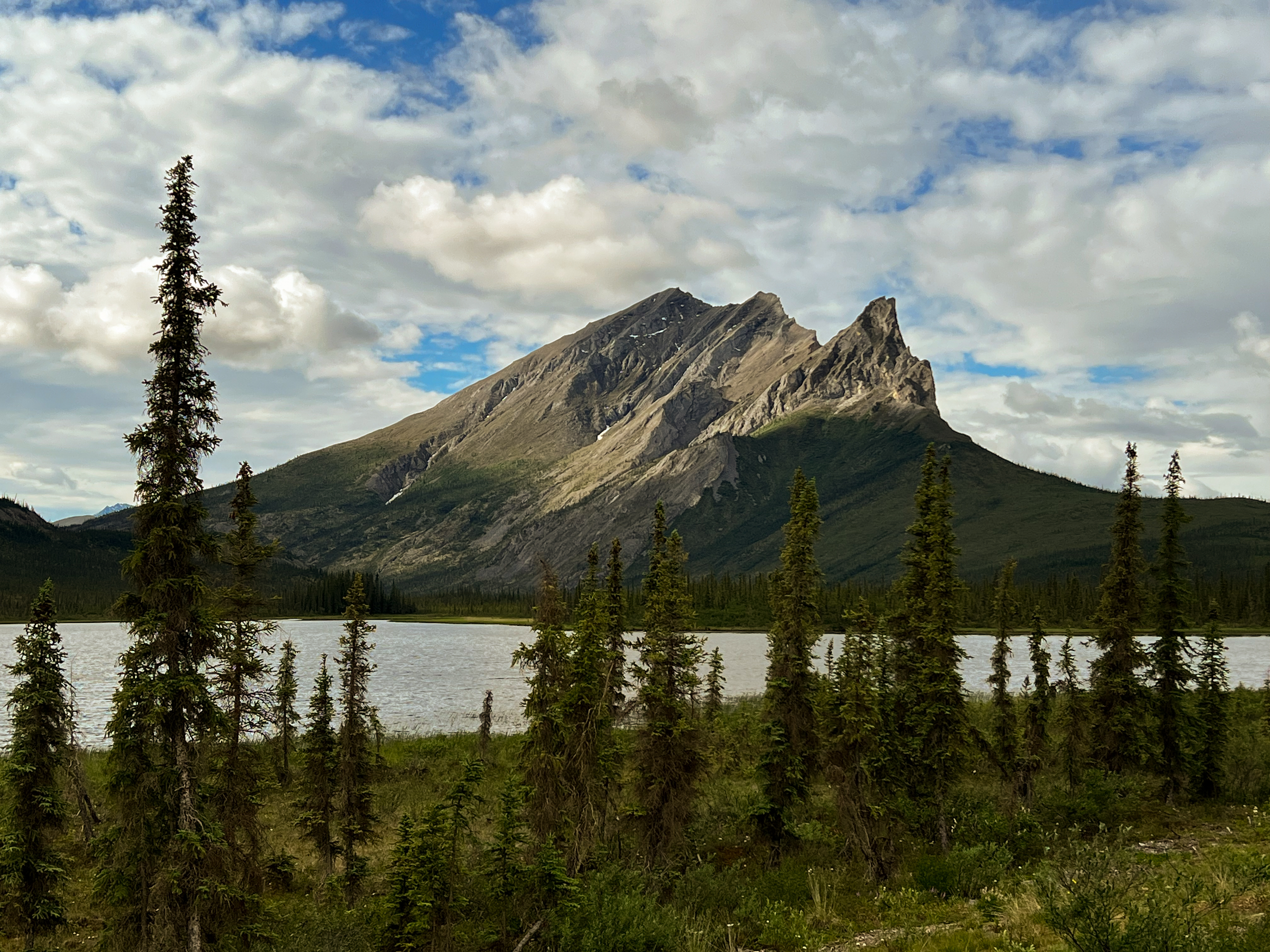
Black Spruce and Sukakpak Mountain heading to Atigun Pass

Pipeling winding up to Atigun Pass

Long Haul trucker cresting Atigun Pass on way to Prudhoe Bay

Returning from Atigun Pass we stopped at Wiseman, about 10 miles north of Coldfoot on the Koyukuk River where Marty and Olaus were finally able to sleep in a warm cabin welcomed by homesteaders after weeks camping in sub zero weather.  It still has only about twelve year-round residents.  The most famous is Jack Reakoff and his wife.  Their refrigerator is in the permafrost crawl space accessed through a hatch in the kitchen floor.  They grow their own vegetables, mostly roots for winter storage, and both hunt their own food.  He said their diet is about 80% meat.  Totally self-sufficient.  

Homesteader cabin, Wiseman

Homesteader Cabin, Wiseman

Jack Reakoff explaining the need for self-reliance being twelve hours from anywhere.

Jack Reakoff's living room.  Note upper left mountain sheep.  
Jack is a strong supporter of a hunt ban as their population is plummeting.

For our last day, our driver's wife took us on a pack-rafting trip, which I'd never done before, but is common here.  Basically, you roll an inflatable kayak into a pack, hike to a river, inflate it, and then float the river.  Delightfully peaceful for two hours. Robin kept her eye out for moose along the shore having never seen one.  During our drive last year through Canada we constantly saw Caution Signs with the moose outline.  However, they are elusive and we didn't see any along the river.... or in Canada.

Robin fully bug protected and ready to pack it in.

Floating the Koyukuk River to Wiseman.

Next Post:  Alaska - North to South

Wednesday, September 7, 2022

Alaska - Part 2

INSIDE PASSAGE

At 6:00 pm on June 15th the Alaska Marine Highway ferry left Bellingham, WA, near the Canadian boarder.  Similar to 1988, the next morning was drizzly with low overcast;  perfect to capture the feeling of SE Alaska, though we were still between Vancouver Island and mainland BC.  However, this time we did not camp on the deck, we had a cabin.

Inside Passage first full day with Aaron, Kate, intrepid author, and Robin.

Our second morning we arrived in Ketchikan at 6:30 am on a cloudless day.  We walked the couple miles into town, got a cup of coffee, and by the time we cruised the boardwalk it was busy with tourists.  For those that haven't been, Ketchikan is a cute little town clinging to the cliffs with the boardwalk elevated above the sea.  It's also where the Bridge to Nowhere was proposed to connect the airport on a gravel bar with the mainland.  Its economy was based on mining and fishing, then timber and fishing, and now tourism and fishing - but tourism by far and away is the economic driver.  

Ketchikan Boardwalk

A large Holland America cruise ship was docked and had disgorged hordes of overweight, camera snapping, multi-ethnic tourists.  There were plenty of plaques describing Ketchikan's history and culture, but hardly any shore-leavers stopped to read them. The boardwalk was lined with sweatshirt, bubble ice-tea, and fish and chip shops.  There were also beautiful local arts and crafts by the indigenous peoples.  When I came here for work in 1997 at the end of the tourist season, I was told shop owners left to winter in Arizona.  Ketchikan gets twelve FEET of rain a year while Seattle gets just over 36 inches.  A lovely town, but pretty one dimensional.  Eye candy, not a meal.  

Our next stop was Wrangle at 3:30 pm.  While I couldn't live here, it seemed delightfully real.  Kids bicycling gravel roads, grocery store, and houses in various states of repair. The only thing for tourists, and the locals, was an ice cream cum sushi shop.  Only in Wrangle would you combine those two.  

Main Street, Wrangle

Homes in various states of weathered disrepair

We didn't get off at the last stop of the day, Petersburg, as it was dinner time.  But Petersburg is of note because of its strong Norwegian heritage which still lives on.  Ironic, since it was founded by the Russians and thus named.  

Petersburg and boat launches

We arrived in Juneau on the third morning at 4:30 am.  Being north now, and close to the solstice, it was already daylight.  The ferry dock is six miles from the town center, and the airport is between the two.  We had a 9:00 am flight on a small puddle jumper so we killed time with breakfast at Donna's Restaurant near the airport where I dined on reindeer sausage with biscuits and gravy.  Excellent!  We boarded our flight for the 20 minute hop to Gustavus, the gateway to Glacier National Park, and from sunny skies to drizzle.  

Mendenhal Glacier outside Juneau from plane window

We were picked up at the gravel runway in Gustavus by a pleasant chatty woman.  As she went over the details of our stay she informed us there was no alcohol at the Inn, but she'd be glad to buy us what we wanted in "town" which, we discovered, consists of three buildings.  Used to working with hoteliers, it seemed odd for a lodge to miss out on this revenue stream, but we didn't think much about it. We arrived at Glacier Bay Inn, an oddly shaped, owner design/built, series of cabins, lodge/restaurant, and out-buildings near an abandoned and overgrown airstrip.  Clearly, no building permits for this project.  The logs were felled and milled on site, interior walls were half finished, and the design seemed very ad hoc. 

Welcoming entry to lodge

Unfinished Dining Room deck overlooking former airstrip.

That afternoon went to the marina and walked the shoreline to a Tlingit tribal house.  We had an informative tour of the art work and local culture by a member of one of the four main Tlingit tribes. Later, the lodge owner complained about how much the Federal Government spent on the construction.  But we thought it beautiful and minor compensation in the scheme of buying all Alaska in 1867 from Russia for $7 million - without consulting the inhabitants for thousands of years.  

Tribal house for four Tlingit Tribes

Interior of Tribal house where each of four supporting poles tell the stories of each tribe

During dinner at the lodge overlooking the former airstrip we met many other staff; all young and from Arizona.  They were very nice with innocent beatific smiles.  As we looked around we realized we were the only ones with wine for dinner.  Bantering with one of the girls stumbling with the wine, she said something like "Oh, I don't know anything about this - I don't drink".  

Very sweet helper.  

Not unusual, but slowly we connected the dots and realized the owners, the staff, and most guests were Mormon.  Later, the pleasant chatty woman who picked us up confirmed our suspicions. It turned out the small community of Gustavus is a predominantly Mormon with strong connections to Arizona.  As the only non-Mormon staff, she was the designated enabler for the gentiles. Mormons historically gravitate to remote areas without much government oversight in UT, AZ, ID, and BC, so it's fitting they'd settle off the grid Alaska. (Read "Under the Banner of Heaven" by Jon Krakauer for a true murder mystery, and a contemporary and historic view of this religion.) 

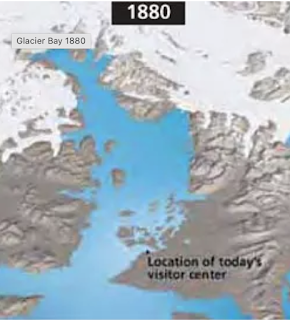
Our next day was an eight hour round trip boat tour of Glacier Bay N.P.  What's quite remarkable about reaching my late 60s is to see Geologic Time happen in our life-time.  Meaning things that have taken tens of thousands of years or even millions, happen in several hundred - or a mere sixty eight.  I first visited Glacier Nat'l Park in MT in 1973 and on our drive trip last year we saw that many glaciers have drastically shrunk since then; expected to be gone before I am.  I remember in the 70s seeing Nat Geo articles of the shrinking Aral Sea off the Caspian, and it is now almost entirely dried up.  And Glacier Bay shows what glacier retreat will look like shortly for Mt Rainier and the Cascades where we live, not to mention the Alps, Andes, and Himalaya where they've closed climbing routes due to avalanche danger.  It's compressed time for us all to ponder.  
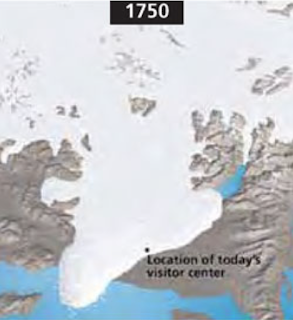


The boat tour took hours to reach the glacier terminus, but during the passage we saw many whales, seals, mtn. sheep, otters, puffins, and even bears celebrating the connubial rights of spring.  

Seals lounging

Bear voyeurism - watching conjugal visits on shore.

At glacier terminus in the water. 

Glacier calving shrinking further.

The day following the boat tour we returned to Juneau; our friends continued on to Anchorage for their trip to Denali and the Kenai Peninsula.  We stayed one night in the hotel I remodeled thirty-eight years before.  "You can never go back" makes sense only if you expect things be the same.  I don't, and therefore find it life-affirming.  The hotel is still there along with many of the design creations we implemented.  But it also changed.  The operator changed.  The uses changed.  The lovely elegant lounge and piano bar we designed is now just a haphazard assemblage of furniture without a soul.  

The town is pretty much the same but more geared toward tourism.  But our tour of the capital was rewarding with unique history and lovely Alaska art. 

Main street of Juneau

The entry to the Art Deco Baranof Hotel.  
The only exterior design we did in 1984 was the canopy.  

Alaska State Capital with statue of William H. Seward,
Lincolns V.P. who purchased Alaska for the US from Russia in 1867.

Next Post:  Coming into the Country - North of the Arctic Circle


Tuesday, September 6, 2022

ALASKA - PART 1

POLES APART

My first trip to Alaska was in May 1984.  It was for my first project in an architectural firm after graduating from UW-Milwaukee and getting licensed the previous year. I'd be with Callison the next twenty-seven years.  The project was to remodel the Baranof Hotel in the capital Juneau, after a fire destroyed the hotel lobby/restaurant/bar a month before.  It was "fast tracked" to open in June; essentially designing at the same time the contractor was demolishing the charred rubble and rebuilding the interiors.  The Fax machine had recently insinuated itself into the design/construction industry; so we faxed sketches to the contractor before the full design was resolved.  Construction documents were completed after the project was finished - welcome to oversight in Alaska.  During one of my visits I managed a side trip to visit a college girlfriend working as a park biologist in Glacier Bay National Park.  I had my first crab direct from the frigid sea into a pot of boiling water on the beach. I gushed that the difference between what we ate vs cooked crab from the Pike Market is like the difference between crab from Pike Market and canned crab.  Being from Chicago, the experience was transformative.  

Jill, my college girlfriend, securing a kayak in Glacier Bay N.P.

My second trip was a vacation in September 1988 when I took the Alaska Marine Highway (AMH) up the Inside Passage from Seattle to Juneau.  I camped on the fan-tail deck with a bunch of young'ins.   Hanging out with a guitar playing cool dude and young girls swooning, but not over me, was a flashback to the 60s summer of love (sadly I was too young then to participate).  

I'm the tall one and the guitar playing "cool dude" is in front - with the blond.

From Juneau I flew to Anchorage and met my former girlfriend again, now a ranger in Chugach State Park.  We hiked across the eponomous range led by her friend "Black-ass" Griffith.  He was an old-timer/homesteader and got his nickname from snowshoeing in the far north thirty years before during a deep subzero snowstorm with the wind at his back.  Frostbite bit his butt.  

Black-ass Griffith and Jill at his cabin.

I left Anchorage and hiked in Denali N.P.; flew on a seaplane to a remote lake somewhere for three days fishing (a total failure as I knew nothing and there was no guide); and drove to Homer on the Kenai Peninsula just to reach Tom Bodett's End of the Road.  

Denali "The Great One"

So, when long time travel companions invited us to join them on the on their June trip this year to Alaska I was not eager.  We had just returned from eight months of travel, were settling into our temporary housing, and were actively house hunting.  However, after a couple months we got itchy twitchy not being on the move.  Robin needed only four more states, including Alaska, to visit them all. And traveling with friends seemed like a good opportunity for for a break.  I also looked at the pins on my wall world-travel map and realized that while I'd been in the state I'd never been Into the Country, as John McPhee referred to the far north.  I plotted out an itinerary that would take us up the Inside Passage and tour Glacier Bay N.P. with our friends.  Then, while they traveled to Denali and Homer, we'd go north: to the Arctic Circle, the Brooks Range, and Utqaigvik (Barrow) on the Arctic Ocean, furthest north in the US. After it all was planned out, we decided to add the Kenai Fjords N.P. to touch both ends of the state.

There was also symmetry to this plan.  Nineteen years ago in 2003 my good friend Thom, whom I previously wrote about in Ukraine, said we should do something adventurous for our 50th birth-year.  He suggested Antarctica!  These two regions, the Arctic and Antarctic, are Poles Apart - in more than just geographic terms!  As an arm-chair student of the Antarctic for decades I was fascinated by its history, exploration, and biology; and its comparison to the Arctic.  Here're comparisons from a presentation I've given.

  • Antarctica vs The Arctic 

·      Antarctica is land surrounded by water, the Arctic is water surrounded by land.

·      Average Antarctic temp at pole is –58°, average Arctic temp at pole is 0°.

·      Less than 20 bird species south of 60° Lat. vs. more than 100 north of 60° Lat.

·      Only lichens south of Lat 82° vs. 100s of flowering plants north of Lat 82°.

·      No indigenous people in Antarctica vs. numerous tribes for thousands of years in the Arctic.

·      No land mammals in Antarctica vs. numerous large animal herds in the Arctic.

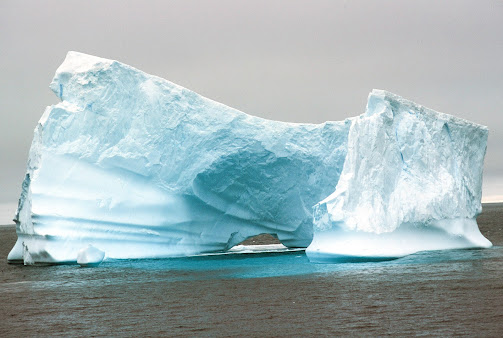
·      Icebergs measured in km in Antarctica vs. meters in the Arctic.

·      Permanent sea ice in Antarctica vs annual sea ice in the Arctic

Crossing Drake Passage to Antarctica
For sheer downright misery, give me a hurricane, not too warm, the yard of a sailing ship, a wet sail and a bout of seasickness.  Apsley Cherry Garrard

"The first view of Antarctica is always an iceberg.  It may be a monolith hovering on the horizon, a barely discernable specter looming out of the mist, or perhaps a sun-spangled, dazzling icon marking the gateway to this new world.  It will undoubtedly be icebergs that leave the most lasting impressions on the imaginations of the visitors."  Mark Jones


Kayaking near an ice berg.  Don't get too close because if ice breaks off below water 
the COG changes and the entire berg can roll creating a tsunami and swamp you. 

Shore-leave with our Russian research vessel in the background.

Ice is the beginning of Antarctica and ice is its end.  As one moves from perimeter to interior, the proportion of ice relentlessly increases.  Ice creates more ice, and ice defines ice.  Stephen Pyne


Gentoo Penguin

Who would believe in penguins unless he had seen them?  Conor O’Brien


Blue Eyed Adele Penguin

They are extraordinarily like children, these little people of the Antarctic world, either like children or like old men, full of their own importance and late for dinner, in their black tailcoats and white shirts fronts – and rather portly withal.  Apsley Cherry Garrard


Fluke of diving Humpback Whale

100 year old explorer hut

100 y.o. preserved canned food left on the shelf of Explorer hut.


Glittering white, shining blue, raven black, in the light of the sun the land looks like a fairy-tale.  Pinnacle, peak after peak, crevassed, wild as any land on our globe, it lies, unseen and un-trodden.  Roald Amundsen

Soaring on 12 wingspan, an albatross approaches Cape Horn, S.A. 
I now belong to a higher cult of mortals, for I have seen the Albatross.  Robert Cushman Murphy

The trip to the north will be a very different!

Next Post:  The Inside Passage